
Honolulu County Court Record Requests
For any public First Circuit file, the statewide eCourt Kōkua access page is the place to begin. Searching costs nothing. When a PDF icon sits beside a docket entry, a public image can be bought online. No icon does not mean the record is closed. The file may sit on paper or microfilm, rest off-site, or simply fall outside the portal's image coverage.
Honolulu County then works down a fallback chain. Try the online search first, then a courthouse terminal. Next comes a call or email to the right Legal Documents Branch. Finally, an oral, electronic, in-person, or written request under the Hawaiʻi Court Records Rules will do. Mail requests go out on the written First Circuit form. At the counter, the in-person access form names the case and the service you want. Calling ahead helps. A branch may still want a signed form and prepayment for copies, though.
- Find the Case ID, court, location, and exact docket entry in eCourt Kōkua.
- Buy an available PDF, or note the filing date and document title if no icon appears.
- Call the branch that holds that case, or inspect it on a free public terminal.
- Submit form 1C-P-858 in person or form 1C-P-827 by the written route.
- Wait for the invoice, prepay the stated charge, and request plain, certified, or exemplified copies.
Hold your money on the first written request. The Judiciary invoices only after staff locate the material and price it, and a precise Case ID can spare you the clerk's exact-name search fee.
Three Honolulu Court Record Products
Honolulu courts sell three distinct products. A docket is the index: parties, filings, events, status, court, and location. A filed document is the pleading, order, judgment, or notice behind one entry. Certification stacks the clerk's assurance on top. It confirms the copy came straight from the court record.
| Product | What it provides | Access |
|---|---|---|
| Docket or case information | Summary, parties, settings, filing entries, and case status | Free in eCourt Kōkua or at a public terminal |
| Filed document | The file-stamped paper behind a docket row | Paid PDF when an icon appears, otherwise through the clerk |
| Certified copy | A court-authenticated copy for an official purpose | Electronic certification online or conventional certification at the courthouse |
The Hawaiʻi Court Records Rules explain the public access framework.
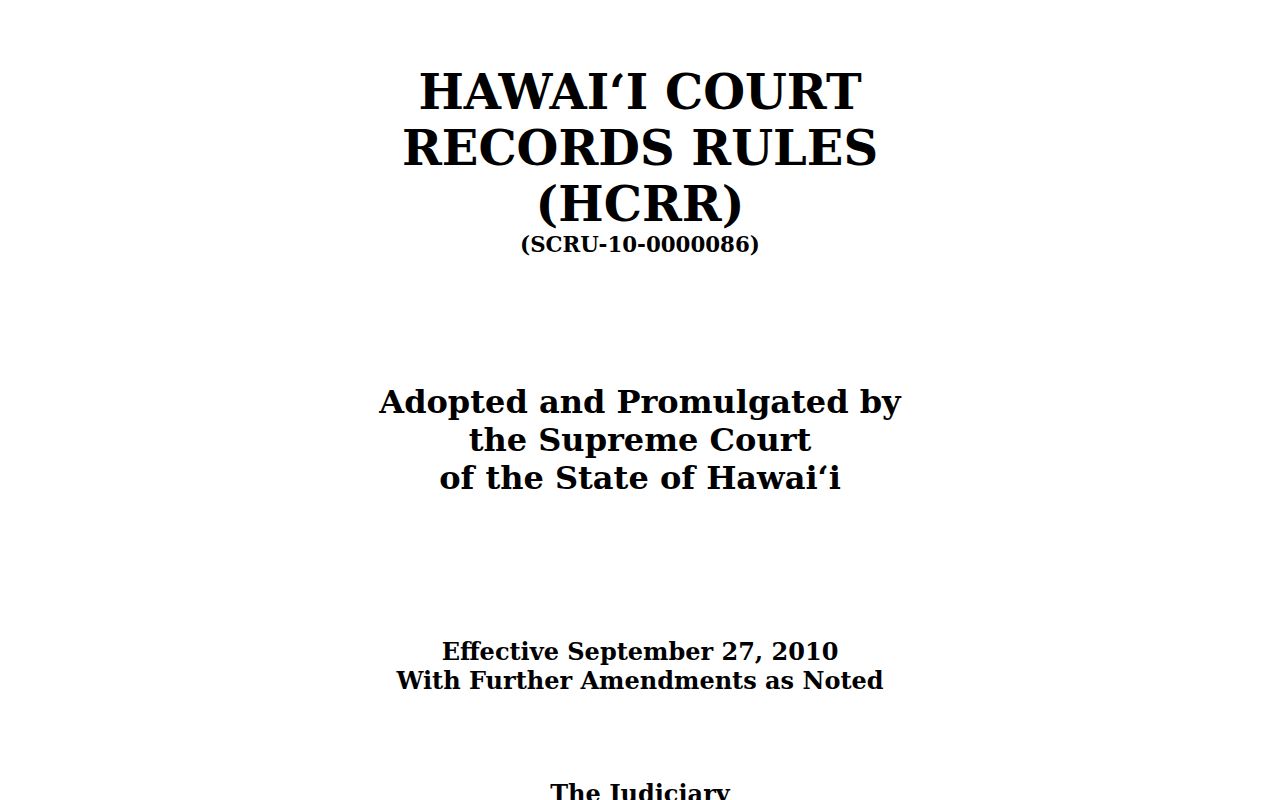
The rules explain the gap. The public portal is useful, yet it is not the official file the clerk maintains.
Kinds of Honolulu Court Records
Where a Honolulu file lives depends on which court heard it. Kaʻahumanu Hale holds the Circuit civil, felony, probate, and guardianship records. District civil, misdemeanor, violation, and traffic files sit at Kauikeaouli Hale. Others go to the proper rural District division. Family Court records stay at Kapolei, with access limits that turn on case type.
- Docket sheets, minutes, notices, and case summaries
- Complaints, petitions, answers, motions, and service returns
- Orders, judgments, dispositions, and sentencing documents
- Public exhibits, transcripts, reporter records, and electronic case data
- Probate, guardianship, appellate, and public Family Court material
A transcript runs through the separate court-reporter and transcript process. A docket minute only summarizes an event; it is not a word-for-word record of what was said.
Honolulu County Record Request Forms
First Circuit gives requesters two forms to choose from. Form 1C-P-858 covers in-person inspection and copying. It asks for the case type, case number, party names, your relationship to the case, identification, and the documents you want. Form 1C-P-827 is the one for a written purchase or access request, routed by court and department. That form also captures the delivery address and the type of copies you need.
The clerk processes requests in the order they arrive. Plan on at least ten business days for a response, and 15 to 20 business days if the work has to be mailed. Some files sit on microfilm or in off-site storage, and those take longer. Under HCRR Rule 10.10, the court must give you notice whenever fulfillment will exceed ten business days. The notice includes an estimate of when the records will be available.
Send the facts, not payment: Give the case number, court, party names, filing date, document title, and copy type. Wait for the Judiciary's invoice before prepaying.
Honolulu Court Records: What They Contain
The public case display breaks into blocks, and the order you read them matters. Start with the Summary. Then compare Events against Dockets. Events show settings and outcomes, while Dockets show filed items, minutes, masks, and document icons. In criminal cases, Offenses lists the charges and Bail/Bond supplies release information.
| Case ID | A First Circuit identifier such as 1CCV-19-1, plus type, status, filing date, court, and location |
|---|---|
| Parties | Names, Party IDs, roles, aliases, and attorney-client associations |
| Events | Past and future hearings, shown latest first, with a disposition where applicable |
| Dockets | Chronological filings, minutes, sealed or in-camera labels, and available PDF links |
| Documents | Pleadings, notices, orders, judgments, and other filed material that remains public |
HCRR Rule 4 settles a common conflict. If a database field and the filed paper disagree, the filed document controls unless a court decides otherwise.
Older Honolulu County Case Files
Image dates matter in Honolulu County. District civil documents filed before October 7, 2019, and Circuit civil documents filed before October 28, 2019, lack public images in the modern portal. The cutoff is November 18, 2019, for Land and Tax Appeal matters, and April 25, 2022, for Family civil documents.
Those are image cutoffs, not destruction dates. An older public court record may still exist on paper, microfilm, or off-site storage. Free terminals serve Kaʻahumanu Hale, Kauikeaouli Hale, Kapolei, Kāneʻohe, and Wahiawā. The ʻEwa replacement terminal was pending, so call before traveling. A missing online image points you to the right Honolulu County records branch. It does not mean no file exists.
Note: Purchased eCourt Kōkua documents stay retrievable for two days. So save the court record promptly after payment.
Honolulu Copy Fees and Certification
Plain and certified copies carry set charges. Buy online and the purchase is nonrefundable. A regular eCourt Kōkua PDF costs the greater of the document minimum or the page rate, electronic certification adds a per-document fee, and conventional embossed certification comes from the courthouse.
| Item | Amount |
|---|---|
| Exact-name clerk search | $5 per name |
| Paper copy or docket index | $1 first page; $.50 each later page |
| eCourt Kōkua PDF | $3 per document or $.10 per page, whichever is greater |
| Certification | $2 per document |
| Off-site retrieval | $5 |
| Microfilm service | $5 per case plus $1 per page |
| Exemplification | $4 |
First Circuit Legal Documents Branch
Kaʻahumanu Hale, 777 Punchbowl Street
Honolulu, HI 96813-5093
808-539-4300
District files belong to Legal Documents Branch 2 at Kauikeaouli Hale. Its records line is 808-538-5149; for a missing case or PDF, the court line is 808-538-5629.
Honolulu State and Federal Records
Honolulu splits its court records between two governments. State work in the Circuit and District courts lives in eCourt Kōkua. Federal civil and criminal cases do not. Those run through PACER and the U.S. District Court for the District of Hawaiʻi. Bankruptcy stands apart too, with its own federal clerk and docket. The U.S. District Court for the District of Hawaiʻi runs the federal side here. Its page lists the clerk services offered in Honolulu.
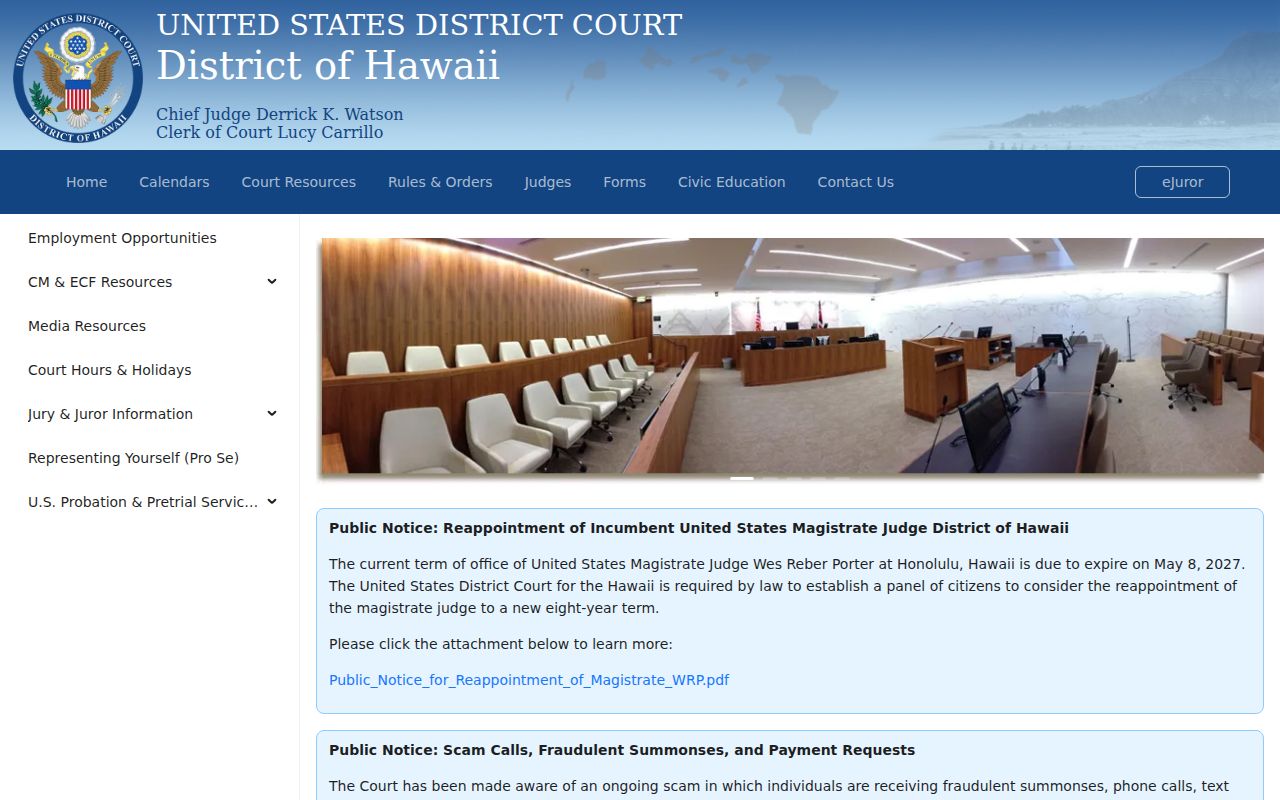
A state Case ID gets you nowhere in the federal system. For a federal filing, turn to the official PACER docket system, which handles federal case and document access.
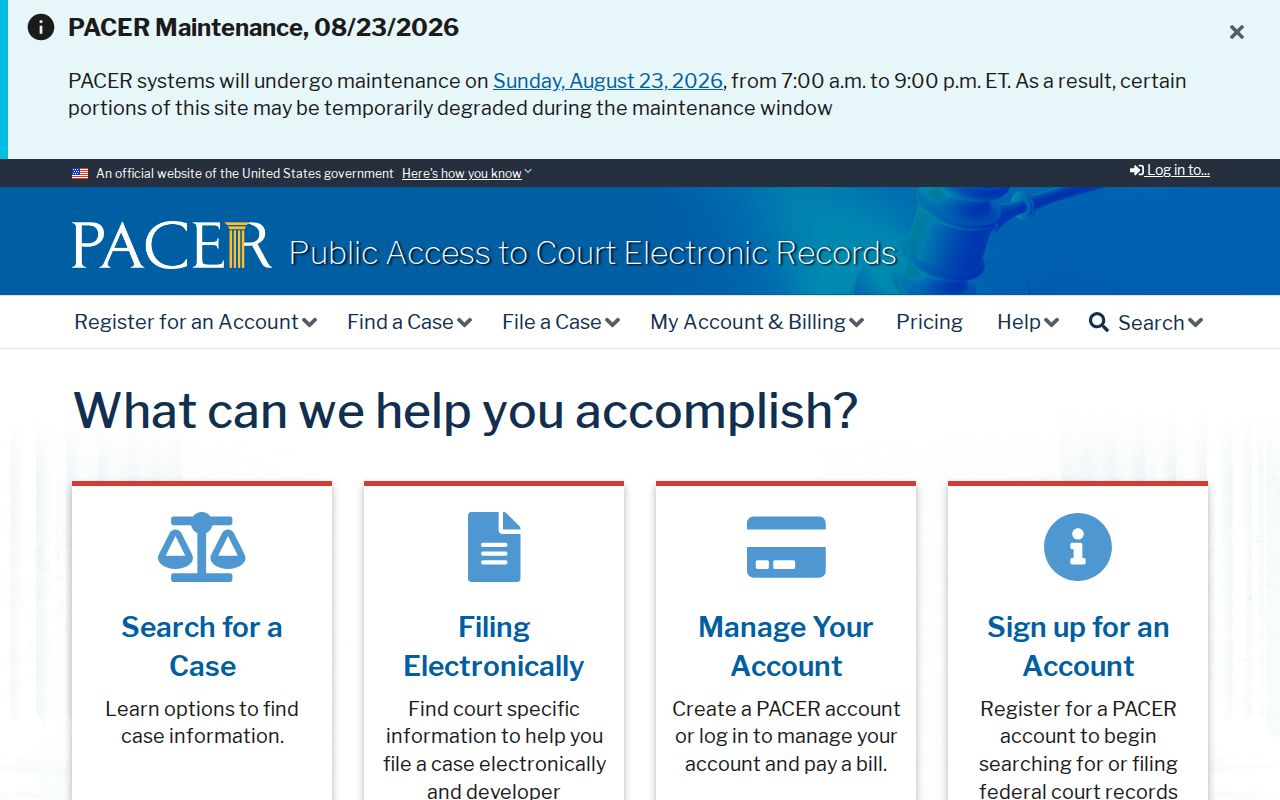
PACER also costs money. It charges federal fees and runs on its own account rules, unlike the free state docket search. For local bankruptcy records, the U.S. Bankruptcy Court for the District of Hawaiʻi is the official source.
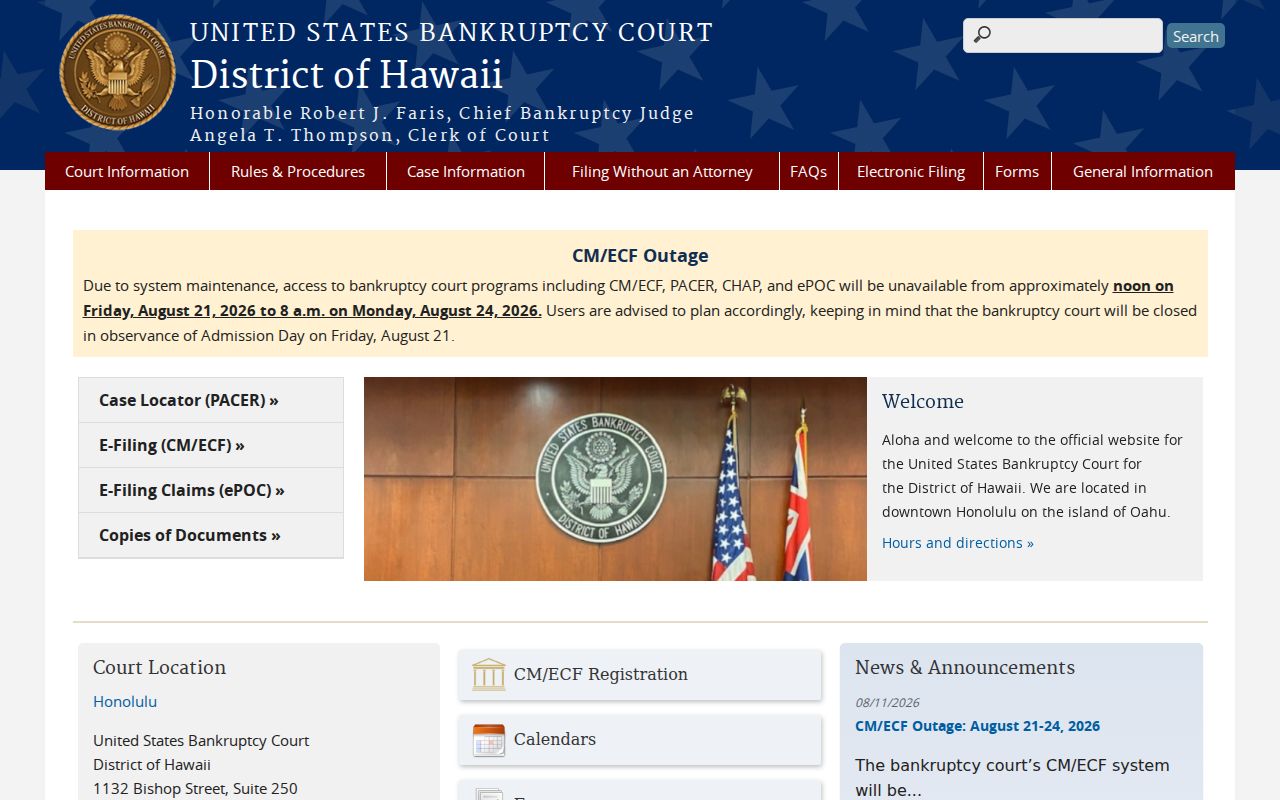
Choosing the right system at the start prevents a false no-result search.
Access Rules for Honolulu Court Records
HCRR Rule 10.1 starts from a presumption of access. A statute, rule, or court order can override it, though. Confidential, juvenile, and sealed cases stay out of eCourt Kōkua entirely. Even an open case can display a sealed or in-camera entry. The document behind it stays withheld.
Key Rules:
HCRR Rules 3.1, 4, 5, 9, and 10 require a docket, define the case record, protect private data, and govern public access.
HRS §571-84 makes juvenile dockets and listed juvenile case materials confidential.
HRS §831-3.2 can require qualifying expunged information to be sealed or removed from public electronic databases.
An authorized person wanting restricted material must follow the court's own access process. A standard public records request will not defeat a sealing order or juvenile confidentiality.
When Honolulu Records Are Missing
A blank result is not always a dead end. Start with the Case ID format and spelling. Older migrated identifiers may require the First Circuit number, the case type, and leading zeroes. Together they build a 12-character search key. Then confirm the court and venue. A District record might sit in Honolulu, Pearl City, Kapolei, Wahiawā, or Kāneʻohe.
When the case shows up but a document does not, call the custodian. Cite the exact docket row. When the whole case is missing, the reason could be simple. It might be confidentiality, juvenile status, sealing, expungement, older data conversion, or a search mismatch. The contextual Honolulu County docket search can sort out name and Case ID fields. Do that before you pay for a clerk search.
Note: When an online summary and the maintained Honolulu County court record conflict, the filed paper still controls.