
Honolulu County Criminal Docket Searches
Begin at eCourt Kōkua, the Judiciary’s public window into First Circuit case information. District, Circuit, and adult Family criminal cases all appear there. No JEFS filing account is needed for a public search. Type a first and last name, a Party ID, or a Case ID. Record-specific keys also work: an arrest number, OTN, SID, or TCT number. Pick First Circuit and the correct court or location. Otherwise you will chase false matches.
You can narrow a name search by filing date and case type. Partial and phonetic controls rescue unsure spelling. Enter a current Case ID with hyphens, like 1CPC-17-1. An older migrated number works differently. It may demand the circuit number, case type, and leading zeroes stretched to a 12-character format. Open a result and read Summary first. Then work through Parties, Bail/Bond, Events, Dockets, and Offenses.
- Accept the eCourt Kōkua disclaimer and complete its verification prompt.
- Choose Party Search or Case Search, then enter the best known identifiers.
- Confirm First Circuit, case type, location, party, and filing date on Summary.
- Compare Offenses with Events, docket entries, orders, and the latest disposition.
- Use a PDF icon for an available document, or contact the correct clerk when none appears.
Honolulu Criminal Offenses Tab
The Offenses tab exists only in criminal cases. It carries the charges. The Dockets tab, by contrast, holds filings, minutes, notices, and orders, while Events tracks appearances and their outcomes. Each tab answers a different question. Remember that a complaint naming several alleged offenses proves nothing by itself. A charge list is not a conviction. Counts end differently, so line up every offense with its disposition and any judgment of conviction before drawing conclusions. The Judiciary’s official docket-code glossary decodes the local shorthand, and the page’s code vocabulary matches what a Honolulu County criminal docket uses.
Read the glossary beside the case record, never instead of it. A code only means something with its count, date, event, and neighboring order.
Criminal Dockets: What They Show
Think of a Honolulu County criminal court docket as a structured index. Summary names the Case ID, status, filing date, court, and location. Parties ties counsel to clients and may list aliases. Bail/Bond gets its own block. Events runs future and completed settings in reverse date order. Dockets supplies the filing history, minutes, and public PDF links. Offenses holds the charges.
| Case ID | A First Circuit identifier, such as 1CPC-17-1, plus case type and filing details. |
|---|---|
| Parties | Prosecution, defendant, attorneys, IDs, associations, names, and public aliases. |
| Bail/Bond | Release information and entries tied to posted or forfeited bond and warrants. |
| Events | Arraignment, pretrial, motion, trial, sentencing, and later settings. |
| Dockets | Complaints, minutes, motions, notices, orders, judgments, and document icons. |
| Offenses | Charges by count. A charge remains an allegation unless the record shows a conviction. |
No PDF on an entry does not mean the filing is missing. It means the clerk does not sell that image through the public cart. Ask the custodian for the paper copy. A minute entry is not a verbatim transcript. Those come through the court-reporter process.
Honolulu Bond and Warrant Codes
Short codes can shift how a case reads. Work through them in date order and check the next event. A warrant entry may later meet a recall or reset. A bond entry can record posting or forfeiture. It never resolves the charge by itself.
- BND
- Bond posted.
- BF or BDF
- Bond forfeited or bail deposit forfeited.
- BWO
- Bench warrant ordered.
- BWRC
- Bench warrant recalled.
- BWR
- A bench-warrant matter was rescheduled.
- JOC
- Judgment of conviction.
DAG and DNC stand for deferred acceptance of a guilty or no-contest plea, and neither is an ordinary final guilty judgment. DNP records dismissal on nolle prosequi, meaning the prosecution dropped that charge, while CDSM denotes plain dismissal. For verdicts, GLTB and GLTJ mark guilty findings after bench and jury trials respectively.
Criminal Case Stages on the Docket
A case can start by complaint, information, or indictment. In District Court, watch for the arrest or citation. Look also for the first appearance, arraignment, bail activity, and a probable-cause stage. A felony held to answer then moves up to Circuit Court. There the docket may show arraignment, counsel, discovery motions, pretrial settings, a plea or trial, verdict, presentence work, sentencing, judgment, and appeal.
Docket flow: Filing › Arraignment › Pretrial › Plea or Trial › Disposition › Sentencing
Related Cases ties proceedings together after a transfer or appeal. If the first register seems to stop, search the linked Case ID. A reset keeps the older event on the docket. It simply adds a later setting. Judge currency by the newest filed notice, not by memory.
Honolulu Treatment Court Dockets
Oʻahu runs four programs inside the state system. They are Drug Court, Mental Health Court, Veterans Treatment Court, and DWI Court. None of them builds its own public search database. The underlying criminal case often stays visible in eCourt Kōkua. Clinical reports, treatment details, and similar protected material remain confidential. So read the settings and orders on the court case first. If the register will not answer a schedule question, call the assigned program. The clerk can help too. The Judiciary’s First Circuit DWI Court page describes the DWI program and its requirements.
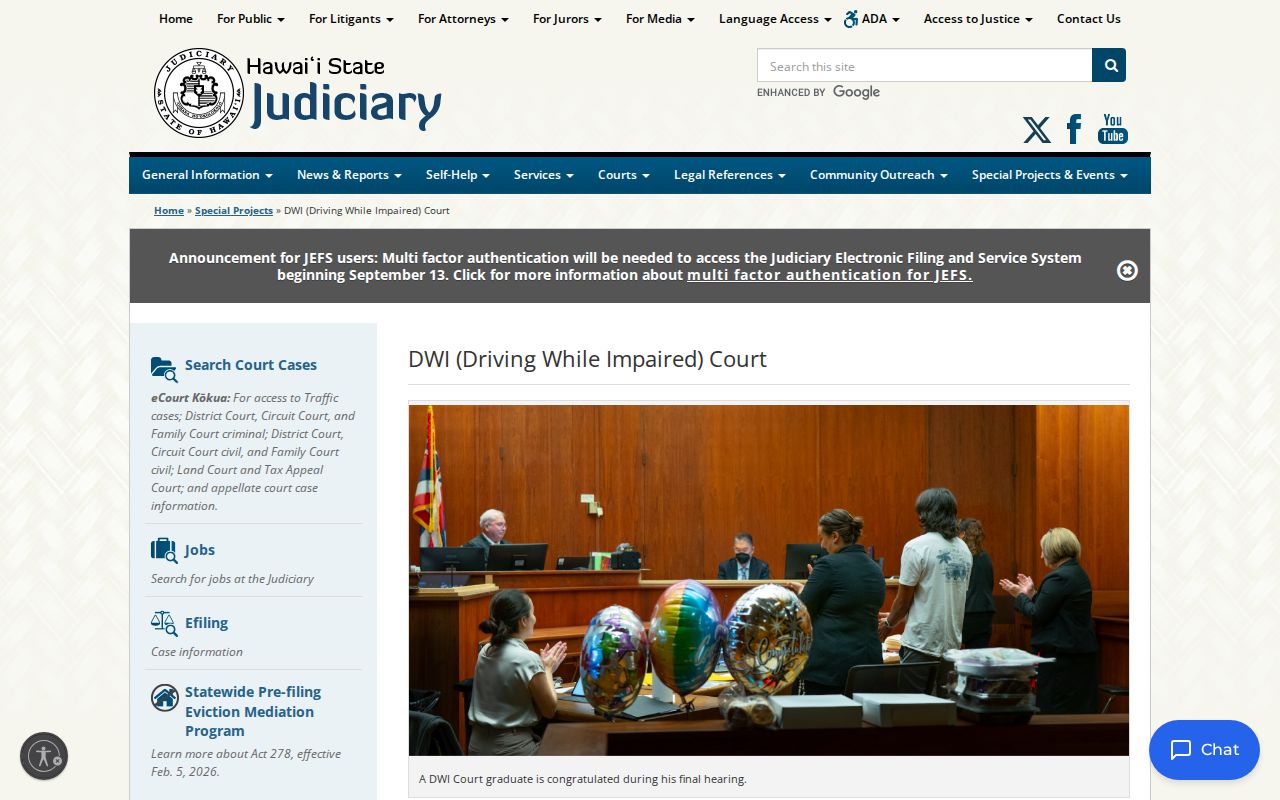
That program setting also explains a pattern people find odd: review and compliance events keep recurring while the criminal docket stays under its original Case ID.
Honolulu County Criminal Docket Courts
Criminal cases in Honolulu County split by seriousness. The District Court of the First Circuit takes violations and misdemeanors. It also starts the probable-cause stage in felony matters. The Circuit Court of the First Circuit alone handles felonies and jury trials. A misdemeanor can shift to Circuit once a defendant elects a jury. Family Court covers the adult family criminal matters assigned to it.
Where the file sits depends on that split. Circuit felony files live at Kaʻahumanu Hale. Honolulu District records are kept by Legal Documents Branch 2 at Kauikeaouli Hale. A rural division keeps the cases filed out there. Adult family matters go through Family Legal Documents at Kapolei. The Oʻahu request directory points each type of Honolulu court docket to the right window.
| Matter | Court | Records route |
|---|---|---|
| Felony or jury case | Circuit Court | Kaʻahumanu Legal Documents, 808-539-4300 |
| Misdemeanor or initial felony stage | District Court | Honolulu 808-538-5629 or the proper rural division |
| Adult family criminal matter | Family Court | Kapolei records, 808-954-8310 |
Missing Honolulu Criminal PDFs
No PDF icon on a Honolulu County criminal docket? Pick up the phone and call the branch holding the case. From there you have three options. Free screen inspection happens at a courthouse terminal. An in-person access request is another choice, or a written request sent by mail, fax, or email. Form 1C-P-858 works for in-person access. Form 1C-P-827 is the written route. Either way, give the clerk the Case ID, case type, party names, and filing court. Include the exact document title or date. Fees are modest but add up. A name search by a clerk runs $5 when you lack the Case ID. Paper copies cost $1 for the first page and 50 cents per page after that. Certification adds $2 per document. Written requests get invoiced, so hold off on payment until the bill arrives. Plan on at least ten business days for a reply. Mailed work takes 15 to 20 business days. Microfilm, off-site records, or multiple files take longer. The Judiciary lists terminal locations on its First Circuit terminal page. Before traveling for an old register or paper missing from the docket search, call first.
Access Rules for Criminal Dockets
Hawaiʻi Court Records Rules open the door to criminal court records. A statute, rule, or court order can close it. The portal skips confidential, juvenile, and sealed cases. A docket can still carry a sealed or in-camera label in plain view. The protected filing itself stays hidden. Rule 9 puts a duty on filers to guard personal data too.
Key rules:
Hawaiʻi Court Records Rules 3.1, 4, 5, 9, and 10 govern docket maintenance, contents, protected information, and access.
HRS §571-84 makes juvenile dockets and related files confidential, subject to defined rights.
HRS §831-3.2 addresses expungement orders and removal or sealing in public databases.
A routine request will not break a seal. When a case will not appear, check the name and ID format first, then look at related cases. After that, ask the right branch whether legacy formatting, a nonpublic category, or an offline file explains the gap.
Honolulu Environmental Criminal Matters
Environmental Court is not its own database. Designated District and Circuit judges hear those matters. The cases can be civil or criminal, so the court, the case type, and the Offenses tab tell you which side you are on. A Honolulu environmental case still moves through the normal First Circuit access routes. That matters when a label says environmental. You may still need the charge, the hearing date, or the judgment. The official Hawaiʻi Environmental Court page explains the program and its assignments.
The statewide label changes nothing on the ground: a Honolulu criminal court record still sits with the First Circuit.